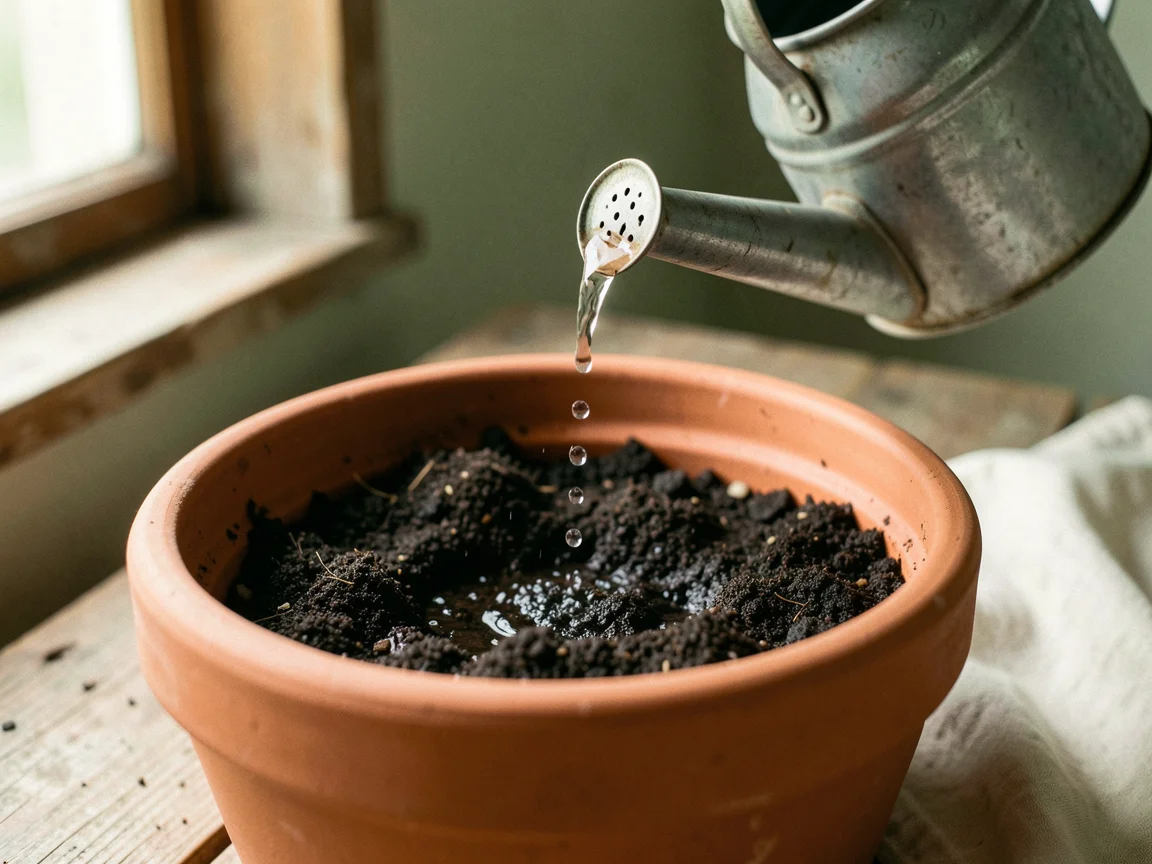
The basil died in August, and the pot was still wet. It had been watered every morning for three weeks, which is exactly why it died. By the end the stems were black at the soil line, the leaves had gone limp and stayed limp, and the saucer held an inch of standing water. That sequence repeats on balconies across Miami every summer, and it is almost never a case of underwatering.
Quick answer. Water when the mix is dry two inches down, then soak until water runs out the bottom. Skip the daily sip. A container in zone 10b usually needs a deep watering every two or three days in summer, while an in-ground bed needs about an inch a week, delivered in one or two long soakings.
Check with a finger, confirm by weight
Push a finger in to the second knuckle, about two inches. Dry at that depth means water. Cool and damp means wait a day. A wooden chopstick left in the pot for ten minutes tells you the same thing, and it reaches deeper than your hand.
Then lift the pot. Wet mix is heavy. A twelve-inch pot gains several pounds when saturated, and your arms learn the difference within a week. Weight is the better test for small pots, where a finger hits the bottom and tells you nothing useful.
Why daily sips make weak roots
Roots grow toward water. Water only the top inch every morning and the roots stay in the top inch. On a July afternoon in full sun that layer can pass 100F. It dries within hours, which leaves the feeding roots sitting in hot dust for the rest of the day. Shallow roots also mean the plant has no reserve when you miss a morning.
Deep watering does the opposite. Fill the pot until water runs out the bottom and the whole column is wet. Roots follow the moisture down, where the temperature is steadier and the mix holds water longer. A plant rooted through the pot can go two days without you. One rooted in the top inch cannot go two hours.
The pour itself takes a few minutes:
- Wet the surface slowly until it stops beading.
- Keep filling until water runs from the hole.
- Come back in ten minutes and top up what the mix absorbed.
Pots and beds are two different jobs
In-ground beds have a reserve. An inch of water a week, rain included, is the old standard and it still works. Set a straight-sided can or a tuna tin under the sprinkler to see what an inch looks like on your timer. One long soak beats three short ones because the water actually reaches the root zone instead of evaporating off the surface.
Containers have no reserve at all. A four-inch pot in July may need water twice a day. A twenty-inch pot may go four days. Pot size and leaf area set the schedule, not the calendar.
Terracotta dries faster than glazed ceramic or plastic because water moves through the walls and evaporates from the outside. The pots in our Terracotta Pot Trio will always drink more than a plastic nursery pot of the same size. That is the trade for the look, and for the airflow at the roots.
Drainage and the rot you cannot see
A pot needs at least one half-inch drainage hole. Anything over twelve inches across needs three or four. If the saucer still holds water an hour after you finish, empty it. A full saucer keeps the bottom two inches of mix saturated, and roots there suffocate. This perched water table kills more container plants than drought does.
Before you blame the plant, check the pot:
- Does water leave the drainage hole in under a minute?
- Is the saucer dry an hour after watering?
- Does the mix smell sour when you dig into it?
- Are the roots at the bottom brown instead of white?
Do not put gravel in the bottom of a pot to improve drainage. It does not work. Water percolates down, hits the gravel, and sits in the mix above it. Use the same mix all the way down and let the hole do its job.
Water until 20 to 30 percent runs out the bottom. That flush also carries out the salts that accumulate from fertilizer.
Wilting that is not thirst
A tomato that wilts at two in the afternoon and stands up by seven is not dry. It is hot, and transpiration is outrunning what the roots can take up. Watering it then adds to the problem.
Test the soil, not the leaves. Push a finger in. If the mix is wet and the plant is limp, water is the wrong response. Move the pot into afternoon shade and check that the drainage hole is clear. If the plant is still limp the next morning and the mix is wet, the roots are rotting.
Root rot looks like yellow lower leaves, black or mushy stems at the soil line, a sour smell, and no recovery after watering. Once it starts, stop watering and repot into fresh mix. Trim the dead roots first with clean shears. Our Neem & Castile Plant Wash will not cure rot. Nothing you spray on a leaf will.
October in zone 10b
The rainy season ends around mid-October. For five months your pots got rained on without your help. Then the afternoon storms stop and the wind picks up. The same pots now go dry in two days. This is the week people lose plants they kept alive since May, because nothing about the weather looks like a drought.
Humidity matters as much as heat. In July, 80 percent humidity slows evaporation and a pot stays wet longer than the thermometer suggests. In October the air dries out before the heat does. Check every pot daily for two weeks after the first dry front, and expect to water more, not less.
Water in the morning. Evening watering leaves foliage wet overnight, which is how powdery mildew and leaf spot get their start. If you can only water at night, water the soil and keep the leaves dry. The long spout on our Olive Enamel Watering Can reaches under a full canopy without soaking it.
This week’s small task
- Lift ten pots before and after watering, and note which felt light. Ten minutes, and you will stop needing a moisture meter.
- Push a finger two inches into every pot and write down which ones are dry. Ten minutes.
- Empty every saucer and clear every drainage hole with a skewer. Fifteen minutes.