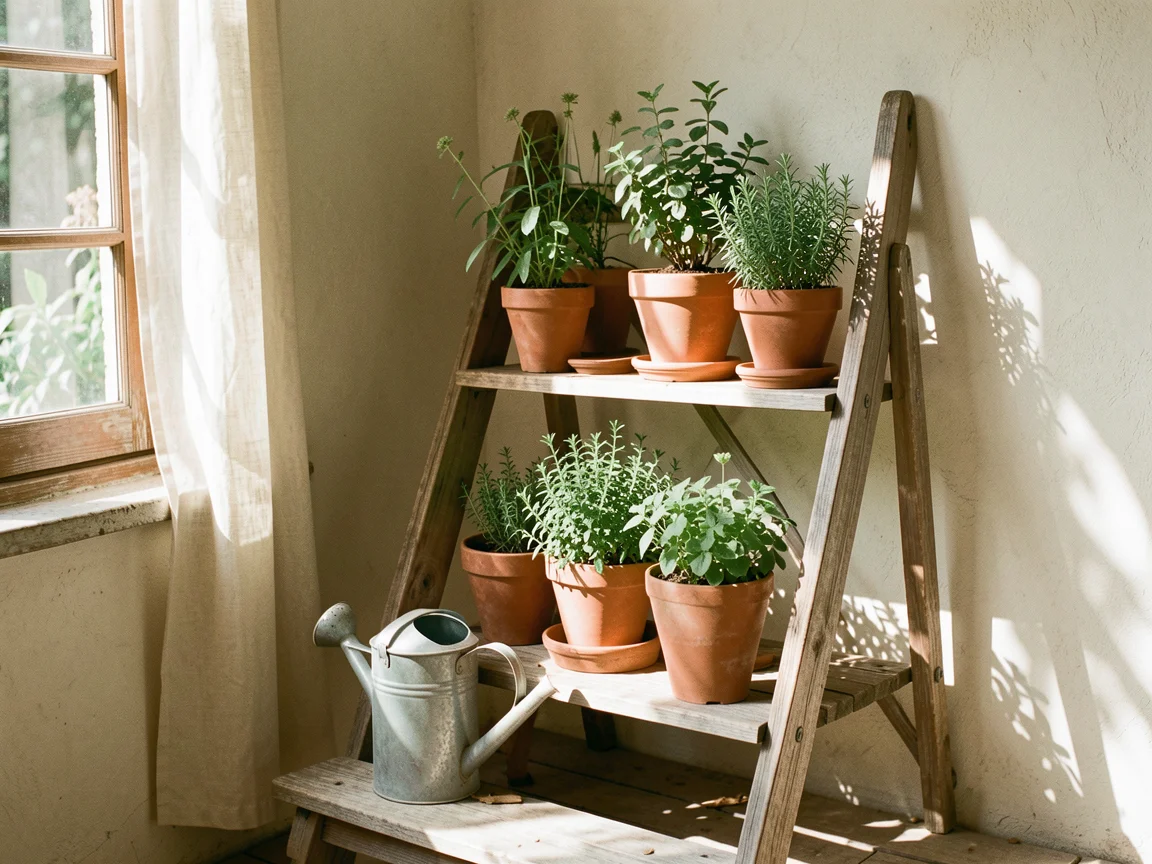
By the end of September the basil on our patio is a woody stem with four yellow leaves, and the mint has sent a runner into the pot beside it. Both looked fine in May. A sunny South Florida patio is not a gentle place for herbs. Eight hours of sun is the easy part. The humidity sits on the leaves until noon, and the rain arrives all at once, then stops for a week. The herbs that last here are rarely the ones photographed on the seed packet. They are the ones that can take heat and a wet June without rotting at the crown.
Quick answer. Nine herbs earn their space in pots here: Genovese and Thai basil, spearmint, lemongrass, garlic chives, Cuban oregano, Italian parsley, rosemary, and cilantro for the cool months. Give each at least 8 inches of pot, a drainage hole, and a mix that drains. Then water by lifting the pot instead of following a calendar.
Nine herbs, sized for a patio
Pot sizes are minimums for one plant. Sun hours mean direct sun, not bright shade under an awning.
| Herb | Pot size | Sun | Water | The catch |
|---|---|---|---|---|
| Genovese basil | 10-12 in | 6-8 h | Even, never soggy | Bolts two weeks after nights stay above 75F |
| Thai basil | 10-12 in | 6-8 h | Even | Bolts too, and leaves blacken in the fridge |
| Spearmint | 10-12 in | 4-6 h, afternoon shade | Wet to the top | Sends runners into the next pot |
| Lemongrass | 14-16 in | 6-8 h | Heavy, daily in summer | Leaf edges cut forearms; the clump needs dividing yearly |
| Garlic chives | 10 in | 5-6 h | Steady, moderate | Slow from seed; buy starts to cut in eight weeks |
| Cuban oregano | 8-10 in | 4-6 h | Let it dry between | Fleshy leaves rot in wet mix; stems go woody and bare |
| Italian parsley | 10-12 in | 4-6 h | Steady | Three weeks to germinate, then sulks after transplant |
| Rosemary | 12-14 in | 6-8 h | Sparingly | Rots at the crown in wet soil; skip the saucer |
| Cilantro | 8-10 in | 4-5 h, morning | Steady | Sulks in heat, seeds out in three weeks; plant October to March |
Rosemary is the one people lose first. It comes home looking like a small pine tree, gets watered on the basil’s schedule, and dies in five weeks. Treat it like a cactus with a scent. Cilantro is the opposite: it wants cool weather and will not pretend otherwise. We plant it in October and again in January, and let the last planting flower, because coriander seed is worth more than another handful of leaves.
Starting from seed? The Heirloom Kitchen Garden Seed Set has basil, parsley and chive seed in amounts that suit four or five pots.
Soil and drainage decide more than the seed packet
Most bagged potting soil sold here is heavy. It holds water well enough for a nursery can and far too well for a patio pot in June. You want a mix that holds together when you squeeze it and falls apart when you open your hand.
We use Living Soil Potting Mix because it has bark and perlite in it and does not turn to mud by August. Whatever you use, do not fill the bottom of the pot with gravel. That old trick raises the saturated layer closer to the roots, which is the opposite of drainage.
Four things to check before a plant goes in:
- A drainage hole you can see through, not one covered by a shard or a coffee filter
- A mix that crumbles instead of clumping
- Two inches of empty rim above the soil line, so water has somewhere to go
- Pot feet or two bricks, so the hole is not sealed flat against the concrete
Skip the coffee filter. It clogs with fine particles and turns a draining pot into a bucket. Unglazed clay suits most herbs here because it dries fast, and the Terracotta Pot Trio covers three plants without costing much.
Watering by weight, not by schedule
A calendar will fail you. The same 10-inch pot needs water every day in late July and every fourth or fifth day in January. No app knows that your patio gets four hours of hard afternoon sun and the one next door gets two.
Lift the pot. That is the whole test. A dry pot of that size weighs almost nothing, and a watered one has weight to it. After a week you will know by the wrist.
Once a week, do this:
- Lift the pot before you water anything. Light means water.
- Push a finger in to the second knuckle. Dry at that depth means water now. Wet means wait a day.
- Water until it runs out of the hole, then empty whatever is in the saucer.
- Skip the misting. It does nothing for the roots, and wet leaves invite leaf spot.
Water in the morning when you can. Leaves that stay wet overnight in this humidity are how basil gets black spots. Use a can with a fine rose, so the stream does not dig holes in the mix.
Feed lightly, and only while the plant is growing
Fresh potting mix feeds for the first month or so. After that, herbs in pots need a little help, and most people give too much. A liquid fish or seaweed feed at half the label strength every two weeks from March through October is plenty. Stop in the cool months, when growth slows and the extra salts just sit in the mix.
Overfed basil makes large, pale leaves with less flavor, and the soft growth brings aphids. A hard spray of water handles most of them. Do not feed a dry pot. Water first, then feed, or you will burn the fine roots at the edge of the root ball.
When the heat wins
Some of these plants will not make it through August, and that is not a failure of your care. Basil flowers when the nights stay warm and the days are long, and no amount of pinching stops it forever. Pinch the top two sets of leaves every week and you push it back a few weeks, usually enough to reach the cooler nights.
Cilantro and dill are cool-season crops here. Plant them in October and again in January, and expect three good cuts from each. When they start to stretch, pull them and put something else in the pot. Fighting a bolting cilantro in June is a waste of water. A 30 percent shade cloth on the west side, dropped at two in the afternoon, buys lettuce and young basil a few more weeks.
This week’s small task
- Lift every pot on the patio and check the drainage hole. Clear anything blocking it, and set the pot on two bricks if it sits flat on concrete. Ten minutes.
- Move the weakest herb into a pot 2 inches wider, with fresh mix. Water it in twice, since dry clay pulls water out of new soil. Twenty minutes.
- Pinch the flower buds off the basil and put the top two leaf sets in a glass of water. They root in about ten days, and you get a free plant. Ten minutes.