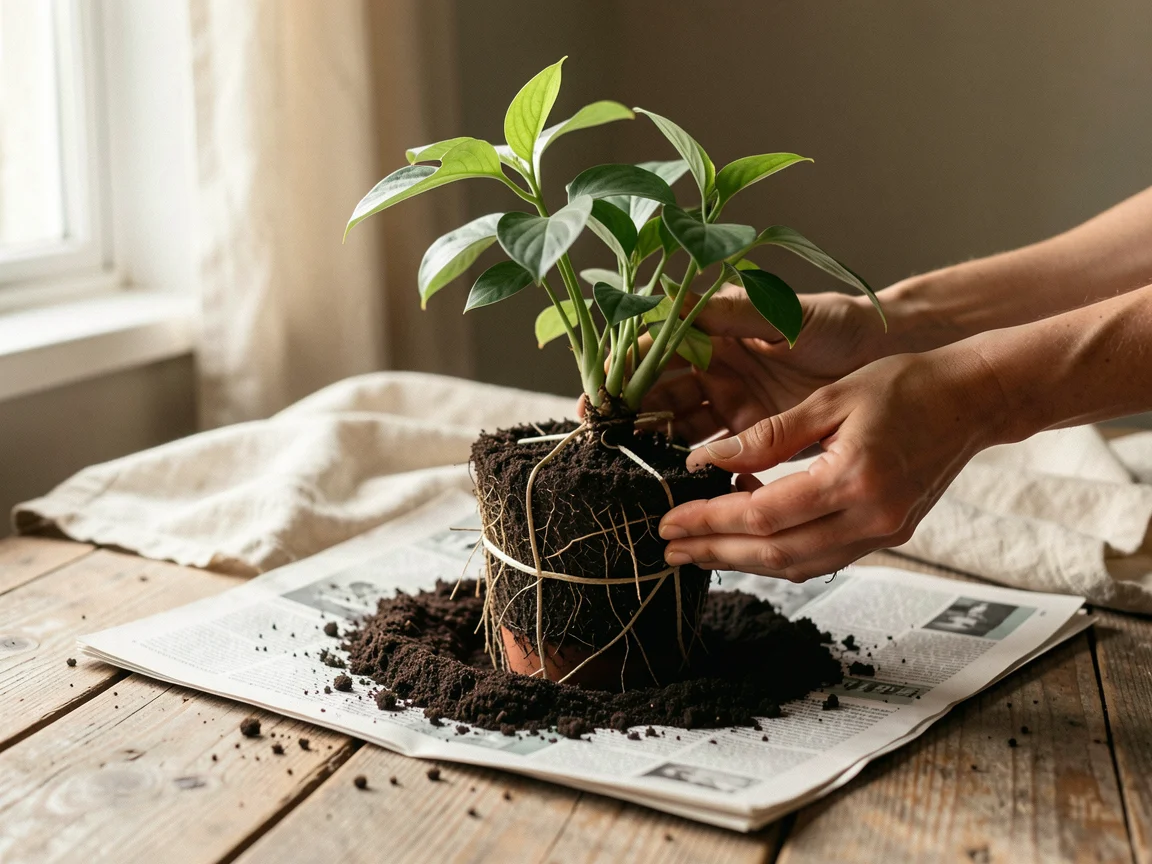
The pothos arrives in April in a four-inch nursery pot. By October the vines reach the curtain rod, the pot dries out every three days, and a root has found the drainage hole. You buy a twelve-inch ceramic pot, fill it with soil from the garden, and repot the whole thing on a Saturday. Two weeks later the lower leaves are yellow and dropping. Every step in that sequence is well intentioned, and most of it is wrong.
Quick answer. Repot when roots circle the pot, water runs straight through, or roots come out of the drainage holes. Go up two inches in diameter, loosen the outer roots, and use a chunky potting mix rather than garden soil. Water once, keep the plant out of direct sun for a week, and skip fertilizer for six weeks.
Three signs the plant actually needs a bigger pot
Most houseplants are repotted too often, not too rarely. A plant that is merely growing is not a plant that needs a bigger pot.
The reliable signs:
- Water runs straight through. A pot that used to feel heavy after watering now passes water out the bottom within seconds. The root ball has filled the space, and there is little mix left to hold moisture.
- Roots appear at the drainage holes or on the surface. White tips at the bottom are a clear signal.
- The plant dries out in two or three days, repeatedly, and the leaves wilt between waterings.
A season of stalled growth can also mean a root-bound plant, but light and feeding are more common culprits. The only way to know is to look. Slide the plant out of its pot in spring, keep the root ball intact, and inspect. Roots circling the outside in a tight mat mean it is time. Loose mix and white root tips mean wait.
The one-size-up rule, and why the big pot fails
Go up two inches in diameter. A 6-inch pot becomes an 8-inch pot. An 8 becomes a 10. A 10 becomes a 12.
The temptation is to skip ahead, especially when the plant is already tall. Resist it. A pot much larger than the root ball holds a volume of wet mix that the roots cannot reach. The mix stays saturated, air is pushed out, and the roots that were supposed to expand into new territory rot instead. Water gathers at the bottom of any pot and stays there when there are not enough roots to drink it. A big pot makes that wet zone bigger, and a small root ball sits right in it.
A plant in an oversized pot also spends its energy making roots instead of leaves. You will wait months for a new leaf that would have appeared in weeks.
Into the new pot, then leave it alone
Slide the plant out. Squeeze the sides of the nursery pot first. If the root ball sticks, run a knife around the inside rim. Never pull by the stem.
Loosen the outer inch of roots with your fingers. If the roots form a tight coil, score the sides in three or four places with clean shears. Brass Bypass Pruning Shears cut cleanly and can be sharpened, which matters when you are cutting roots rather than stems. Do not wash the mix off healthy roots. Bare-rooting is for treating root rot or for plants shipped bare, not for a routine repot.
Then:
- Put an inch of pre-moistened mix in the new pot.
- Set the root ball so the top sits an inch below the rim.
- Fill around the sides, firming with your fingers, not your fists.
- Water until it drains from the bottom.
For the first week, keep the plant in bright indirect light, out of direct sun. Water once at repotting and then wait until the top two inches dry. Expect a few lower leaves to yellow and drop. That is normal transplant stress, not failure. Do not fertilize for four to six weeks. Fresh mix already contains nutrients, and fertilizer on damaged roots burns them.
Potting mix is not garden soil
Garden soil is mineral particles, clay, silt, and whatever lives in it. In a pot, it compacts and holds water like a brick, leaving little air for the roots. It also brings weed seeds, insect eggs, and fungi into a closed environment with no predators to keep them in check.
Potting mix is a different material. It is built from coco coir or peat, pine bark, perlite, and sometimes pumice. The point is structure: particles that stay open, hold air, and drain. Living Soil Potting Mix is chunky enough for aroids and holds moisture without turning anaerobic.
If you are reusing a pot, scrub it and rinse it. Old mix goes in the garden, not back in the pot.
Plants that prefer being underpotted
Some plants grow better with their roots slightly crowded. A snake plant (Dracaena trifasciata) in a pot that is too large, watered like a houseplant, is one of the most reliable ways to rot it. The same goes for the ZZ plant (Zamioculcas zamiifolia), which stores water in its rhizomes and sulks in wet mix.
Others in this group: pothos, spider plant, Christmas cactus (Schlumbergera), agave, and most succulents. They can stay in the same pot for two or three years. When you do move them, go up one size and use a pot that dries quickly. Terracotta Pot Trio works well for succulents and snake plants because the clay wicks moisture out through the walls.
The plants that want more room sooner are the fast growers: monstera, philodendron, bird of paradise, and anything that has visibly filled its pot within a season.
This week’s small task
- Slide one plant out of its pot over the sink and look at the roots. Five minutes.
- Measure the pot’s diameter across the top and write it down. The next pot is two inches wider. Two minutes.
- Put the plant back, water it, and leave it alone for seven days. Five minutes of work, then patience.